Identifying Physical Coherence Factors During User-object Interaction in Extended Reality (XR)
- Identify the Physical Coherence factors that significantly influence "presence" during user-object interactions.
- Analyze the impact and relative importance of Physical Coherence factors on the sense of presence
- Derive a user response function for a given XR environment

A) Main Experiment Setup

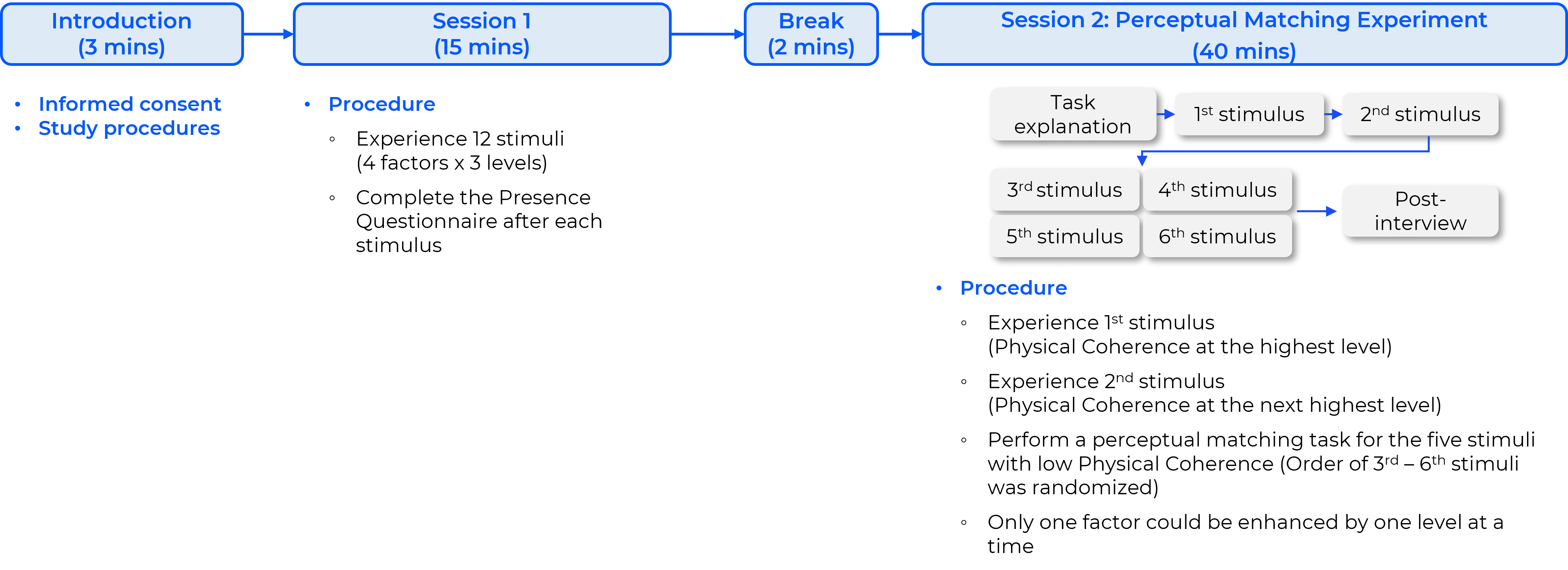
B) Main Experiment Procedure
*All stimuli were created through Spark AR Lens Studio
Markov Chain Analysis
- Transition probability based on transition matrix
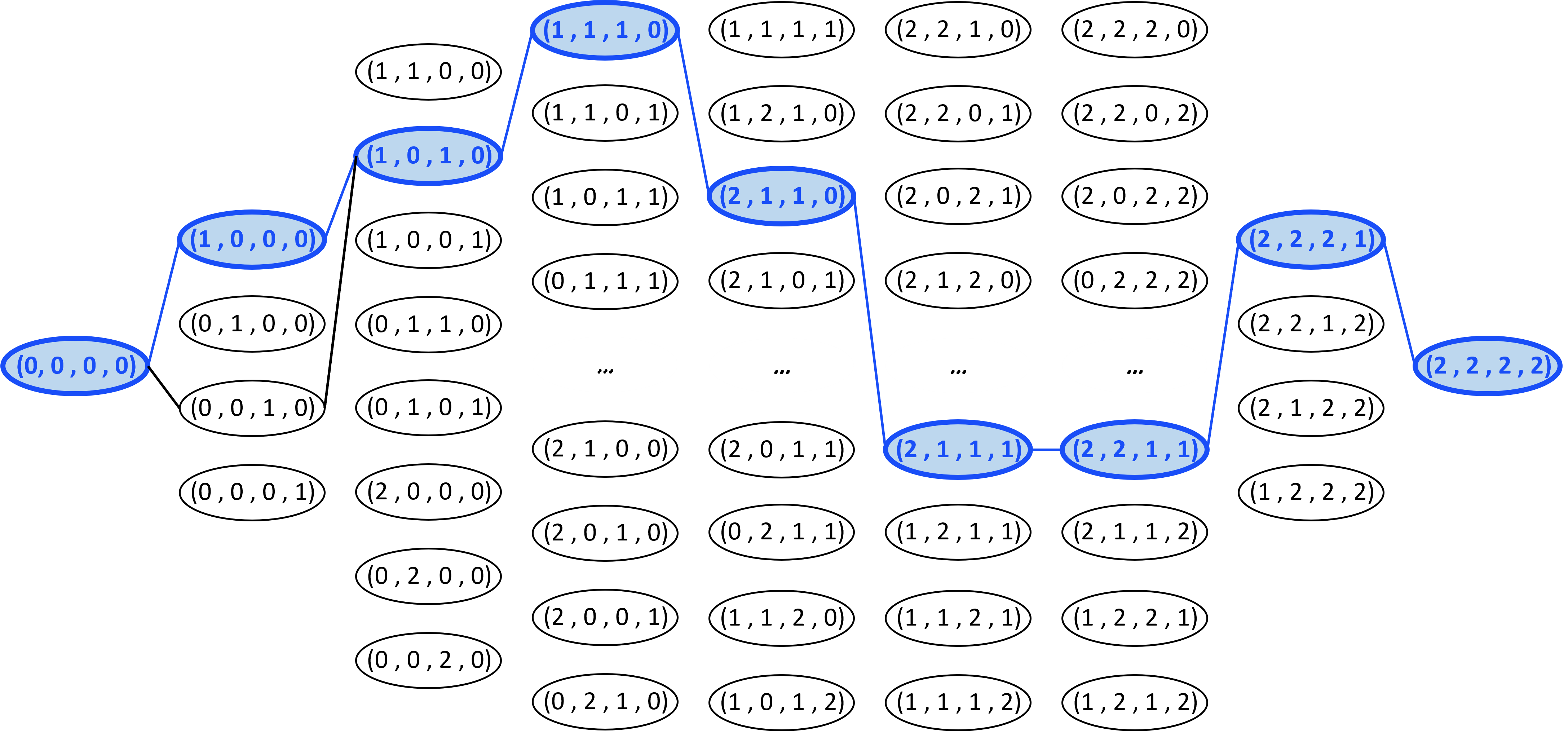
- Transition flow
- Final state
Statistical Testing
- Mann-Whitney U Test
- ANOVA
Example of transition flow:
- Force was found to be the most contributing factor to presence, followed by occlusion and lighting
- Force and occlusion affect the interactivity, while lighting affects the visual-sensory aspects of an XR environment
- Sufficiently realistic and predictable movements of a virtual object can compensate for its visual discrepancy from reality in XR
- The degree of interactivity of an XR environment is of essence to generate a high level of presence.
Publication in the International Journal of Human-Computer Studies (2023)